Anthropic vs the Pentagon
Anthropic is going head-to-head with the Pentagon, Figma just got Claude Code, and Tailwind's been quiet... until now.
Show Notes
Anthropic's Pentagon contract is on the rocks, Figma now connects directly to Claude Code, and Tailwind CSS finally ships v4.2.0 after months of silence. Plus Payload CMS v3.77, Perplexity dropping ads, Cursor's new plugin marketplace, and more from the modern web dev world.
Transcript
What's up, everyone? Welcome to Next in Dev, a weekly overview of all the news I could find in the modern web dev industry. This week, Anthropic is going head-to-head with the Pentagon, Figma just got Claude Code, and Tailwind's been quiet... until now.
First, as always, I'll start with Payload. The Payload team released version 3.77. This version came with a handful of helpful features.
The first is that the depth included in your Local API is passed through to the request query to keep things consistent between the other API methods. Now you don't need to manually pass the request query's depth in addition to your local API's depth. So, that saves you a few lines of code.
Next, all database adapters now support a new customID argument on database create methods. This allows you to create documents with custom IDs without requiring custom IDs at the collection level. This is useful when you need to create documents with predetermined IDs, like during migrations, seeding, syncing data from external systems, or restoring backups.
The last new feature migrates the MCP plugin from Vercel's mcp adapter to mcp-handler. This also addresses a security vulnerability from the MCP SDK package. This new feature simply removes insecure and deprecated dependencies from the plugin.
A couple of key bug fixes include a fix for a bug that prevented hasMany text fields from being filtered with a contains operator, internationalization support for edit mode buttons, and fixing the broken polymorphic join edit drawer.
Figma has released a model picker in Figma Make. This feature lets you switch between AI models in the prompt box when using Make. Also, you're now able to use Claude Opus and Sonnet 4.6.
Figma now brings in Claude Code's output into Figma as editable frames. You can now use Claude to quickly spin up an example of what you want, and then be fine-tuned exactly how you want it in Figma. This is a two-way connection, too, so you can iterate back and forth without losing context. For those who follow this, Figma's stocks reacted favorably to this news.
Fourteen canary releases landed over the past week, but three themes stood out. The "fragment scroll" experiment is reshaping how the App Router handles scroll position during navigation. If layout shifts have been yanking users to the wrong spot after route changes, this is the fix in progress. Turbopack continues its march toward production readiness with better dead code handling in dynamic imports and a growing list of bug fixes. And a new "Instant" feature is taking shape that lets non-blocking dynamic content render in shared parent layouts without stalling the whole page.
These are all pre-release builds, so nothing requires action. But the scroll handling and Instant features are worth watching if you're building Next.js projects. The steady Turbopack improvements suggest the webpack migration path is getting more viable with every release.
Dokploy now offers a one-click template to deploy OpenClaw, the personal AI assistant that connects to messaging apps to do stuff for you. The template handles Docker Compose setup with defaults that make sense, so you can get running quickly. Use with caution.
Separately, v0.27.1 leans into team use with SSO upgrades, Microsoft Teams notifications, and internationalized domain name support in Traefik. For self-hosters evaluating Dokploy against Coolify or similar tools, this pair of updates closes gaps that previously made it harder to justify for team use.
Tailwind's first release since December expands its utility library with a major push toward CSS logical properties. These new properties give developers first-class support for direction-aware layouts without custom CSS. The update also adds four new color palettes, a @tailwindcss/webpack package for teams still on webpack, and a font-features-* utility for typography control.
The start-* and end-* positioning utilities are now deprecated in favor of inset-start-* and inset-end-*, so teams should plan to migrate when upgrading. The logical properties expansion matters most for anyone building internationalized interfaces that need support for non-left-to-right designs.
Perplexity phased out the sponsored placements it began testing in 2024. Perplexity says that even labeled ads risk undermining trust in its AI answers. The company is now betting on its hundreds of millions in annual revenue from subscriptions. OpenAI is going the opposite direction with ads in ChatGPT's free tier, while Anthropic has committed to keeping Claude ad-free. For anyone building content strategies, visibility inside Perplexity now depends entirely on organic citations.
The creator of the viral open-source personal agent OpenClaw, is joining OpenAI to lead work on personal agents. OpenClaw will move to a foundation to preserve its open-source status. The bot has received 100,000+ stars on GitHub since its November launch. This signals personal agent tooling is moving from hobbyist novelty to serious platform investment.
Cursor launched a plugin marketplace with partners including AWS, Figma, Linear, and Stripe, positioning itself as an extendable platform rather than a standalone editor. The release also added sandbox network access controls and asynchronous subagents that can create their own subagents for work across files. A follow-up release gave the CLI cloud plan handoffs and inline Mermaid diagram rendering, with 42 smaller improvements across tooling and reliability.
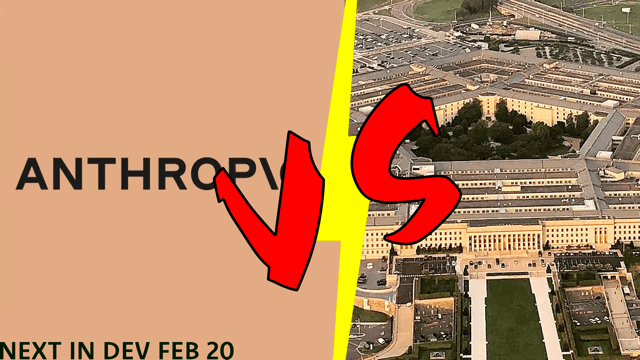
Anthropic's $200 million contract with the Pentagon is "under review" after negotiations stalled. Anthropic wants guardrails against autonomous weapons and mass surveillance, while the Pentagon wants unrestricted access for all lawful purposes. A senior official said the agency could designate Anthropic a "supply chain risk" if terms aren't reached, a label typically reserved for foreign adversaries. OpenAI, Google, and xAI have agreed to broader terms.
Of course, Anthropic is the one major AI company that still at least pretends to care about AI safety.
They also released Claude Sonnet 4.6 across all plans, delivering higher performance at a lower price. They claim that early testers preferred it over Sonnet 4.5 70% of the time and over Opus 4.5 59% of the time. Those who were tested said they saw better instruction following and fewer hallucinations. For developers, the headline here is cost efficiency. Tasks that previously required Opus could potentially now be handled reliably at the Sonnet tier.
Anthropic and Infosys are collaborating on enterprise AI agents for telecom, financial services, and manufacturing, combining Claude Code with Infosys's Topaz AI platform. The focus is on agentic workflows for claims processing, compliance reviews, and legacy system migration in industries where you can't just drop a model into production without domain expertise and governance.
Claude Code had seven releases this week, anchored by a massive bug fix effort across Windows, macOS, and WSL2. Windows got the most attention with fixes for terminal rendering, bash output being silently discarded, Unicode corruption, and hooks failing entirely. Performance improved across the board. Startup is reportedly about 500ms faster, and memory usage in long sessions dropped significantly. New features include Sonnet 4.6 support, claude.ai MCP connectors in Claude Code, and Windows ARM64 binaries. A notable security fix prevents hallucinated permission descriptions from incorrectly granting bash access.
Google rolled out Lyria 3 in the Gemini app, letting users describe a vibe or upload a photo to generate a 30-second track with lyrics and cover art. Google frames this as fun rather than serious music creation. The company acknowledges its filters against mimicking existing artists "might not be foolproof," which is doing a lot of heavy lifting. The SynthID watermarking and audio verification tools are worth watching if you're building anything that touches AI-generated media. As a musician and general enjoyer of art, this honestly grosses me out.
Railway introduced a conversational AI agent for its canvas. You can ask what's running, debug failing deploys, and stage changes through natural language. Two features also graduated to general availability: Postgres metrics with query statistics that surface your most expensive queries, and live network flow visualization showing traffic between services with throughput and drop data. Postgres observability is the most immediately practical piece, removing the need to reach for external tooling to find slow queries.
What did I miss? There is so much happening in modern web dev right now that I know I missed something. Leave a comment, or join the Discord and subscribe to the Next in Dev newsletter at nlvcodes.com. I'll try to cover it in a future episode.
Thanks for watching or listening. See you next time.